
Global Semiconductor and Economic Trends: Micron Profit Surge and Qatar Money Supply Growth
Summary
Amid the evolving landscape of global finance and technology, two seemingly unrelated signals have emerged recently: a stunning profit turnaround for semiconductor giant Micron Technology, and a steady expansion in Qatar's broad money supply (M2). One reflects the health of a key high-tech sector, while the other illuminates liquidity conditions in a resource-rich Gulf nation. Together, they offer valuable perspectives on underlying currents in the global economy. This article delves into both developments, analyzing their causes, implications, and the broader picture they jointly present for investors and policymakers.

Introduction
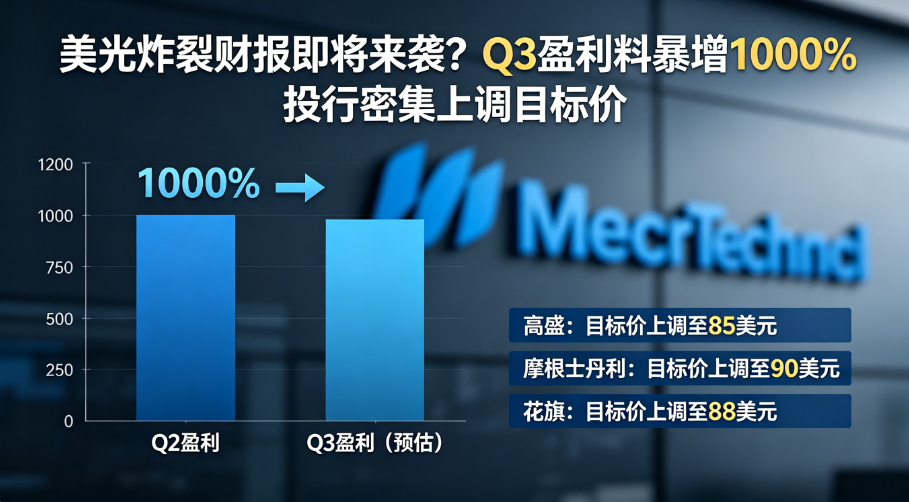
The year 2026 has brought a confluence of macroeconomic crosscurrents: persistent inflationary pressures, shifts in central bank policies, and accelerating digital transformation across industries. Against this backdrop, two key data points have caught the eye of market analysts: Micron Technology's projected Q3 earnings surge of 1000% year-over-year, and Qatar's M2 money supply growth of 9.65% year-on-year in May. Though from vastly different domains—advanced memory chips and monetary aggregates—they paint a picture of an economy awash in liquidity and hungry for cutting-edge technology. Understanding the interplay between monetary expansion and corporate profitability is crucial for stakeholders navigating today's complex financial environment. This article examines the drivers behind Micron's stellar performance, analyzes the implications of Qatar's money supply growth, and explores potential synergies between these developments.
Part 1: Micron Technology's Blowout Quarter – A Semiconductor Supercycle?
Micron Technology, one of the world's leading memory and storage solutions manufacturers, has long been a bellwether for the semiconductor industry. After a prolonged downturn in 2024 and early 2025 due to inventory adjustments and weak demand for DRAM and NAND flash memory, the company has made a remarkable recovery. Based on latest projections, Micron's Q3 FY2026 earnings are expected to surge 1000% compared to the same quarter last year—a figure that has surprised even the most optimistic analysts.
Drivers of the Surge
Multiple factors contribute to this explosive growth. First and foremost is the insatiable demand from artificial intelligence (AI) and machine learning applications. The explosion of generative AI models, large language models, and high-performance computing has created an inexhaustible thirst for high-bandwidth memory (HBM) and advanced NAND solutions. Micron's HBM3E products, with superior speed and energy efficiency, have secured contracts with major cloud service providers and AI chip makers.
Second, the recovery in traditional markets (PCs, smartphones, data centers) has been stronger than expected. After two years of subdued sales due to post-pandemic normalization, both enterprise and consumer sectors are upgrading hardware. Micron's diversified product portfolio, covering DDR5 DRAM, GDDR6X graphics memory, and UFS 4.0 storage for mobile devices, allows it to capture this cyclical upturn.
Third, the industry's capital discipline has tightened supply. After years of oversupply and margin compression, major memory players have scaled back capacity expansion. Micron itself cut capex in FY2025, and the resulting supply-demand balance has restored pricing power. The company's Q3 gross margin is expected to exceed 40%, a dramatic improvement from the single-digit lows just twelve months ago.
Challenges and Risks
Despite the euphoria, not all is smooth sailing. Geopolitical tensions remain a persistent shadow. The US-China tech rivalry, export controls on advanced chips, and restrictions on memory sales to certain customers could disrupt Micron's global supply chain. Moreover, the semiconductor industry is known for its cyclicality; if hyperscaler demand cools or macroeconomic headwinds intensify, the current upcycle could eventually give way to a correction. Nevertheless, Micron's current trajectory underscores a deeper structural reality: the world is transforming into an AI-first economy, and memory chips are the backbone of this revolution. As the company's CEO recently noted: "We are not just selling components; we are powering the next generation of computing infrastructure."
Part 2: Qatar M2 Money Supply – A Measure of Liquidity and Economic Diversification
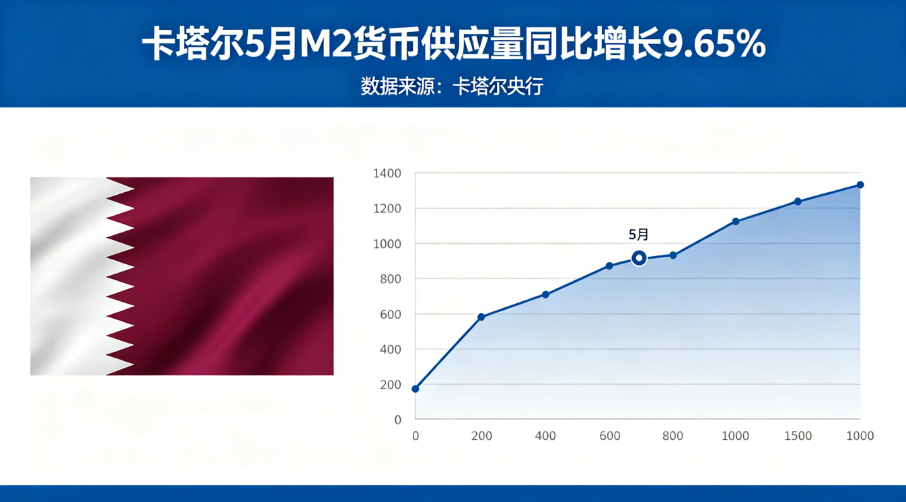
Turning to the Middle East, data released by the Qatar Central Bank for May 2026 shows the country's broad money supply (M2) grew by 9.65% year-on-year. While not staggering at first glance, this figure represents a sustained acceleration compared to the moderate 5-7% growth rate throughout 2025. For a nation historically reliant on hydrocarbon exports, this expansion signals a healthy liquidity environment and ongoing economic diversification efforts under the Qatar National Vision 2030.
Components of M2 Growth
Qatar's M2 money supply includes currency in circulation, demand deposits, savings deposits, and time deposits. The 9.65% year-on-year growth reflects several factors:
-
Strong non-oil sector activity: Following the 2022 World Cup, sectors such as tourism, hospitality, and financial services have rebounded strongly. Foreign direct investment (FDI) inflows have increased, especially in technology, renewable energy, and logistics. This has fueled deposit creation and credit expansion.
-
Government spending and infrastructure: The Qatari government continues to invest heavily in infrastructure projects—including expansion of Hamad International Airport, new metro lines, and Lusail City development—which inject liquidity into the domestic economy.
-
Monetary policy stance: The Qatar Central Bank maintains a cautious but accommodative monetary policy, keeping interest rates competitive with the US Fed rate path while ensuring ample bank liquidity. This encourages both saving and borrowing.
Inflation and Growth Implications
A rising M2 supply is often a precursor to inflation if not accompanied by real output growth. However, Qatar's diversification strategy has effectively expanded the economy's productive capacity. Non-oil GDP has been growing at an average annual rate of 5% since 2023, outpacing overall GDP growth. Inflationary pressures remain contained, with consumer price inflation around 2.5%. The central bank's prudent regulation of credit growth has prevented overheating. More importantly, excess liquidity has provided capital for new technology investments, including semiconductor equipment, data centers, and AI research—areas in which Qatar aspires to establish itself as a regional tech hub. Indeed, the Qatar Development Bank has launched several initiatives to support local startups and attract foreign tech companies.
Part 3: The Intersection of Tech Earnings and Monetary Liquidity
At first glance, a memory chip manufacturer in Idaho and a Gulf nation's money supply might seem unrelated. But a closer look reveals important connections that affect global portfolios.
How Liquidity Drives Tech Demand
When money supply grows in key economic regions like the GCC, funds often flow into sovereign wealth funds. The Qatar Investment Authority (QIA), managing over $500 billion in assets, has been an active investor in global technology. QIA has increased its investments in AI, cloud computing, and semiconductor companies in recent quarters. Micron itself is likely a target of such institutional investment. Moreover, excess liquidity in oil-rich nations supports local demand for high-end electronics, data centers, and storage infrastructure, indirectly benefiting memory makers.
Feedback Loop
Conversely, profitability of companies like Micron contributes to global equity market performance, which in turn supports household wealth and corporate balance sheets. Higher stock valuations can create wealth effects, boosting consumer and business confidence. Strong semiconductor earnings also signal the health of the digital economy, encouraging central banks in emerging markets (including Qatar) to maintain supportive monetary conditions.
Associated Risks
However, this virtuous cycle is not foolproof. A sudden tightening of global monetary policy—possibly in response to persistent inflation—could compress valuations and reduce liquidity. If the Fed raises rates further, capital flows to emerging markets like Qatar could slow, and tech stocks could correct. For now, the consensus among economists is that central banks are near the end of their hiking cycle, which is favorable for continued expansion.
Conclusion
The simultaneous occurrence of Micron Technology's 1000% profit surge and Qatar's 9.65% M2 money supply growth offers a compelling snapshot of the current economic moment. One highlights the unstoppable momentum of the AI-driven semiconductor supercycle, where innovation and supply discipline have created a cash bonanza for industry leaders; the other underscores the resilience and diversification of a hydrocarbon economy that is successfully channeling liquidity into productive investments. For investors, the key takeaway is to recognize the interconnectedness of these themes. A dollar of liquidity in Doha may ultimately finance a memory chip order in Boise; a surge in chip profits may buoy confidence in global risk assets. While risks remain—geopolitical friction, potential inflation resurgence, and cyclicality in semiconductors and commodity prices—the data points are broadly positive. As we progress further into 2026, the focus will be on whether Micron can sustain its blistering pace and whether Qatar's money supply growth translates into tangible long-term productivity gains. For now, the two signals serve as powerful reminders that the future belongs to those who embrace technological change and maintain sound monetary management.