
The Korean Peninsula Puzzle: Navigating Geopolitical Tensions and Global Financial Turmoil
Keywords: Korean Peninsula, geopolitics, crude oil futures, financial markets, stock market, diverging performance, Japan, South Korea, global uncertainty
Introduction
The Korean Peninsula has long been a focal point of geopolitical tensions, but recent developments have once again thrust it onto the global stage, sending shockwaves through international financial markets. With crude oil prices falling sharply and Asian stock markets opening with mixed signals, investors worldwide are closely watching the intricate interplay between regional security dynamics and economic stability. This article examines the multifaceted impacts of the current situation on the Korean Peninsula, exploring how geopolitical uncertainty is reshaping market sentiment and driving volatility across key asset classes.

Volatile Reaction in Energy Markets
The rapid decline in crude oil futures is one of the most visible signs of heightened geopolitical concerns. Although the Korean Peninsula is not a major oil-producing region, its strategic location and potential for supply chain disruptions have historically influenced energy markets. The current downward pressure on oil prices reflects a complex mix of factors, including weakening global demand expectations, increased production from non-OPEC countries, and a perceived reduction in immediate supply risks.
From a technical analysis perspective, the trading chart shows a clear bearish trend, with key support levels being repeatedly tested. Market participants are particularly concerned about the sustainability of current price levels, as oversupply conditions persist and demand may shrink further. The inverse relationship between geopolitical tensions and oil prices has become increasingly nuanced, with traders now factoring in both immediate security risks and longer-term economic impacts.
The International Energy Agency has revised down its demand growth forecast, citing the uncertain macroeconomic environment exacerbated by regional tensions. Moreover, the impact of sanctions and trade restrictions related to the North Korea situation has prompted energy traders to adopt a more cautious stance. The interplay between supply chain disruptions and weak demand-side fundamentals has created a highly challenging environment for price discovery.
Diverging Performance in Asian Stock Markets
The openings of Japan and South Korea's stock markets presented a contradictory picture, reflecting fragmented investor sentiment. Japan's stock market showed relative resilience due to domestic corporate earnings and a weak yen, while South Korea's market struggled to maintain upward momentum. This divergence highlights the different exposures of the two major economies to the evolving geopolitical landscape.
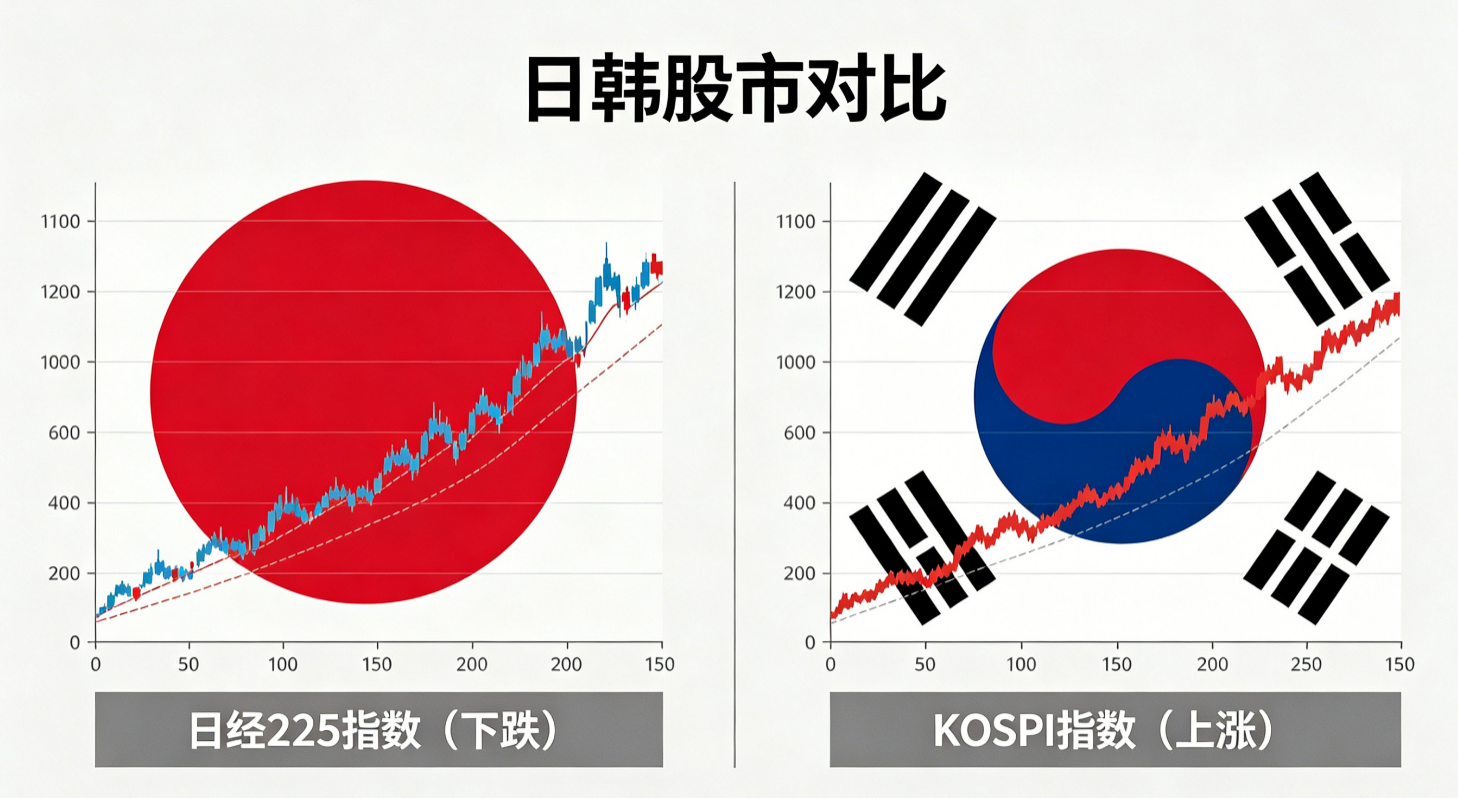
Japan's Defensive Positioning
Japan's relatively stable market performance can be attributed to several structural factors. The country's deep capital markets and strong institutional investor base provide a buffer against external shocks. Additionally, the Bank of Japan's continued accommodative monetary policy stance offers confidence to market participants. However, beneath the surface, there are concerns about Japan's export-dependent industries, particularly electronics and automobiles, which could face headwinds from regional trade disruptions.
The technology sector, a major driver of Japan's stock market, now faces uncertainty over supply chain reliability. Companies with large exposure to South Korean component suppliers are reassessing their risk management strategies, while investors demand greater transparency about contingency plans.
South Korea's Vulnerability
South Korea's underperforming stock market reflects its direct exposure to geopolitical risks. As the country most immediately affected by tensions on the peninsula, its financial markets tend to react more sensitively to security-related developments. The volatility in the KOSPI underscores the challenge of pricing in unpredictable political outcomes while maintaining fundamental economic valuations.
The electronics sector, dominated by global giants like Samsung and SK Hynix, is of particular concern. Any escalation could disrupt production facilities near the DMZ, potentially causing significant supply shocks to the global semiconductor market. Moreover, the financial sector's exposure to inter-Korean economic projects adds another layer of complexity to risk assessment.
Implications for Global Investors
The current situation on the Korean Peninsula serves as a stark reminder of the interconnected nature of geopolitical risk and financial markets. For global investors, the challenge lies in balancing short-term volatility management with long-term strategic positioning. The divergence between energy and equity markets suggests that traditional correlations may be breaking down, requiring more sophisticated risk assessment approaches.
Hedge funds and institutional investors are increasingly incorporating geopolitical scenario analysis into their portfolio construction processes. The possibility of both diplomatic breakthroughs and sudden escalations demands flexible investment strategies that can adapt to rapidly changing environments. Safe-haven assets, including gold and government bonds, continue to attract attention, though their valuations remain elevated after years of central bank support.
Conclusion
Geopolitical tensions on the Korean Peninsula pose a complex challenge to global financial markets, with impacts extending far beyond regional borders. The simultaneous decline in crude oil prices and diverging performance in Asian equities reflect the nuanced nature of current risks. While immediate market reactions may appear contradictory, they collectively highlight the deep uncertainties that characterize the present environment.
Looking ahead, resolving tensions on the Korean Peninsula will require sustained diplomatic efforts and credible security guarantees. For market participants, maintaining diversified portfolios and robust risk management frameworks will be essential to navigating these turbulent times. The interplay between geopolitical dynamics and financial markets will continue to evolve, demanding constant vigilance and adaptability from global investors. Ultimately, the Korean Peninsula puzzle serves as both a cautionary tale and a strategic opportunity for those prepared to navigate complexity and uncertainty.