
Title: Foreign Inflows into Thai Bonds Amid Stock Market Decline: A Portrait of Divergent Investor Sentiment
Keywords: Thai bonds, foreign investment, stock market, capital flows, emerging markets, risk appetite, monetary policy
Introduction
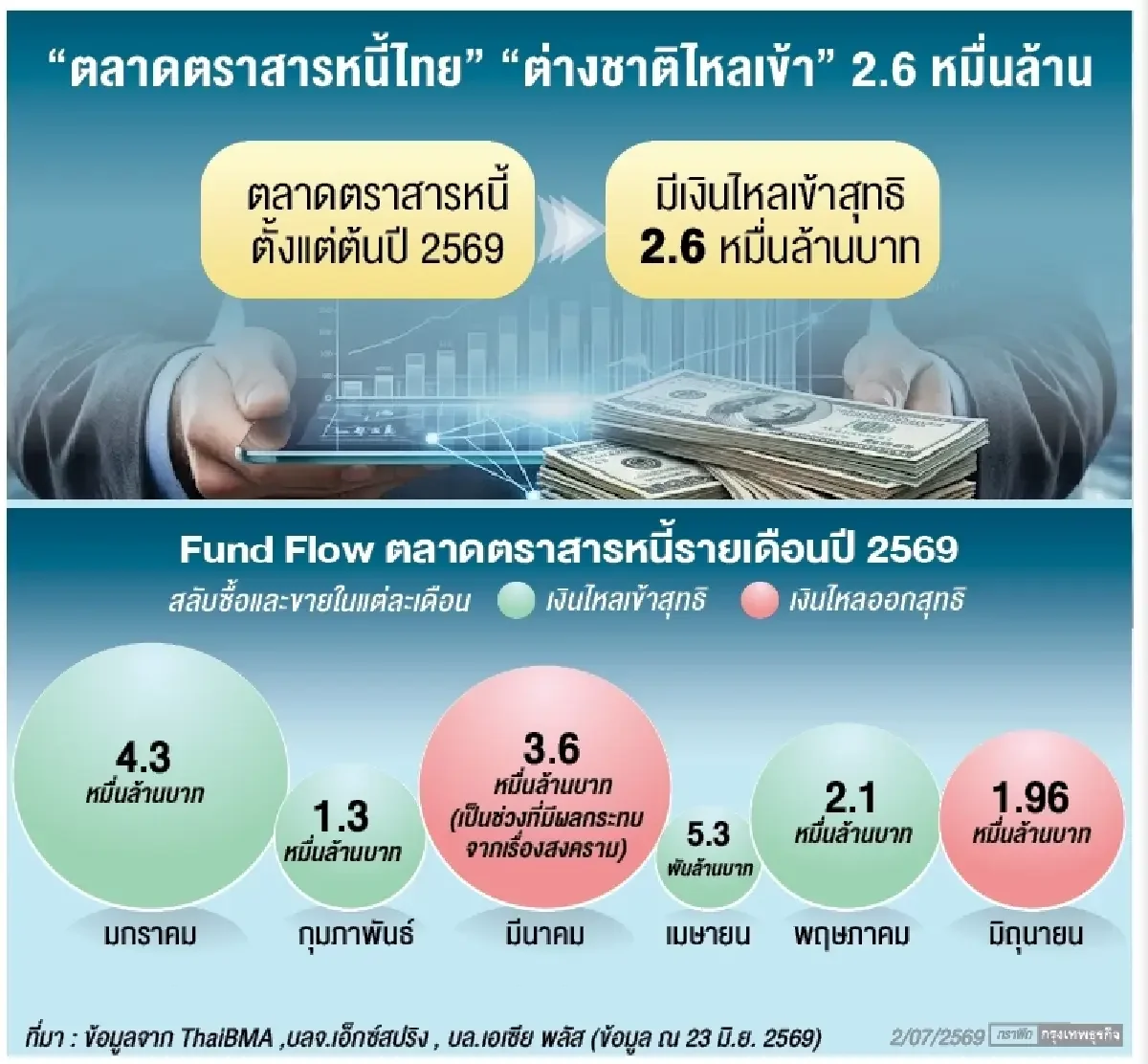
In recent trading sessions, Thailand's financial landscape has shown a stark contradiction: foreign capital steadily flows into the country's bond market while the domestic stock market suffers significant pressure. This divergence is vividly illustrated in two accompanying charts, raising important questions about investor sentiment, regional dynamics, and underlying economic fundamentals. To understand this phenomenon, one must analyze global yield-seeking behavior, local monetary policy signals, and the structural vulnerabilities that continue to weigh on Thailand's equity market.
Foreign Buying of Thai Bonds: A Flight to Safety

The first chart shows a clear upward trend in foreign purchases of Thai government bonds in recent weeks. This surge is mainly attributed to global yield-seeking in an environment where major central banks, especially the Fed, signal that the tightening cycle has peaked or may even reverse. Thai bonds offer relatively attractive real yields compared to other Asian peers, making them a magnet for institutional investors seeking stable returns with moderate credit risk.
Moreover, Thailand's relatively sound external position—thanks to a strong current account surplus and ample foreign reserves—provides an additional layer of confidence. The Bank of Thailand's cautious approach to interest rate normalization, maintaining a policy rate still lower than many regional peers, also reduces baht volatility, further attracting fixed-income investors. The steady inflows represent a vote of confidence in Thailand's macroeconomic management, even as the country navigates a slow domestic recovery.
Stock Market Weakness: Structural and Cyclical Headwinds
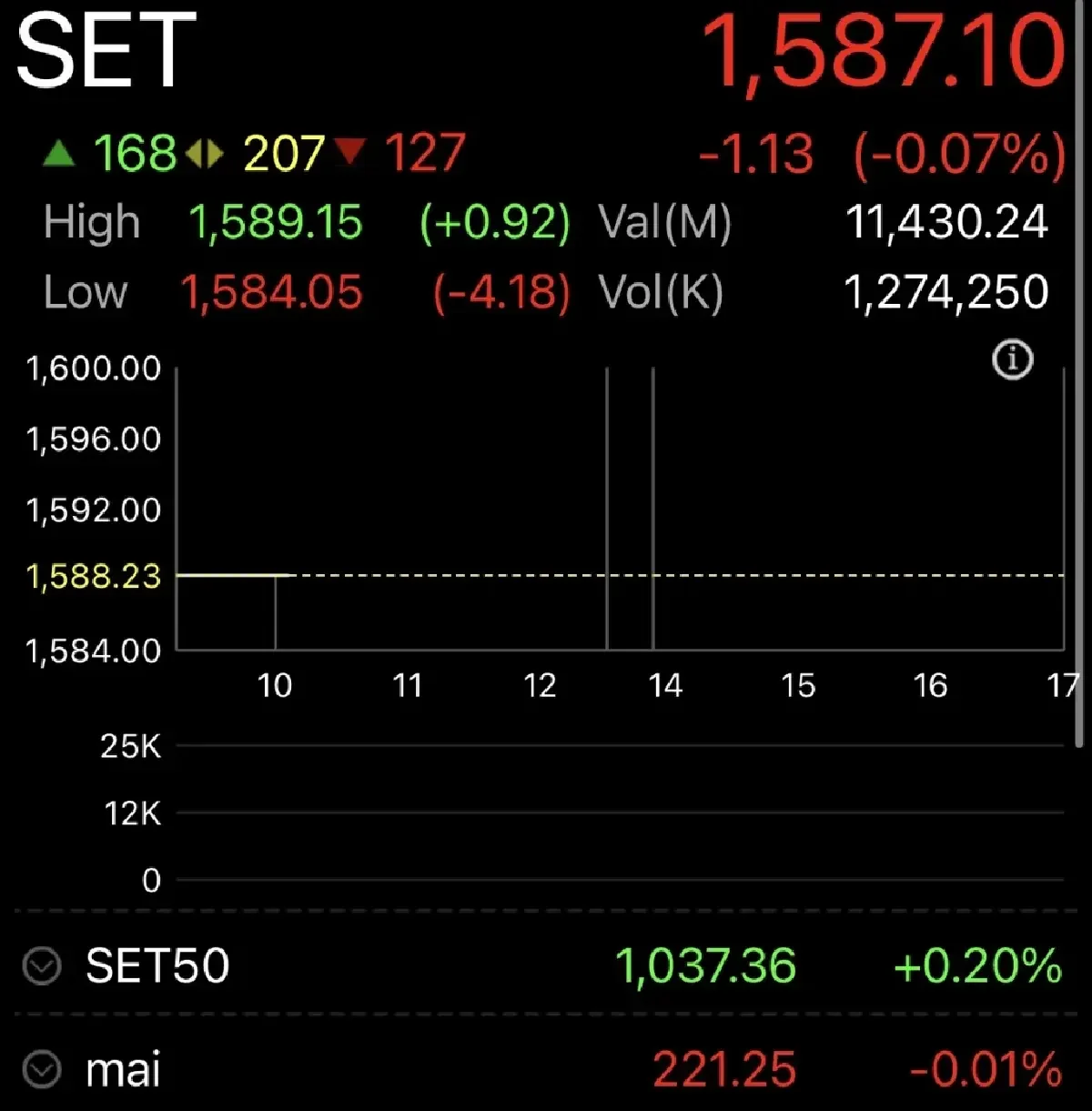
In stark contrast, the second chart shows a sharp drop in the Thai stock index during early morning trading. Divergence between bond and equity markets is not unusual, but the magnitude here warrants examination. Several reasons explain the stock sell-off.
First, the composition of the Thai stock market is heavily skewed toward sectors such as tourism, retail, and real estate—industries still sensitive to the uneven recovery in Chinese tourism and domestic consumption. Although tourist arrivals have rebounded, the pace is slower than initially expected, and high household debt continues to dampen spending power.
Second, corporate earnings reports for the recent quarter were disappointing, with many companies citing rising input costs and margin compression. Manufacturing, in particular, faces headwinds from weak global demand and competition from regional rivals like Vietnam and Indonesia.
Third, political uncertainty looms. The protracted process of forming a new government and ongoing debates over fiscal stimulus measures have dampened business confidence. Foreign portfolio investors, often marginal price-setters in the Thai equity market, have rotated out of Thai risk assets into safer alternatives, exacerbating the morning plunge.
Divergence Explained: Risk Appetite and Carry Trade
At first glance, the simultaneous inflow into bonds and outflow from stocks seems contradictory. However, it reflects a classic flight-to-safety move combined with carry trade considerations. Global investors are bifurcating their exposure: they use Thai bonds as a relatively safe vehicle to capture yield, while reducing equity exposure due to broad risk aversion toward emerging market stocks. This behavior is further reinforced by the fact that bond purchases are often executed by central banks and sovereign wealth funds with longer investment horizons, whereas stock trading is dominated by hedge funds and active fund managers who react more quickly to the short-term news flow.
Implications for Thai Policy and Regional Outlook
For Thai policymakers, bond inflows provide a welcome buffer against currency depreciation, helping to stabilize the baht. However, weak stock market poses challenges: it dampens wealth effects and may further drag domestic consumption. The Bank of Thailand may find it difficult to ease monetary policy in the near term, as it needs to keep bond yields attractive for foreign investors. Instead, fiscal measures—such as support for tourism and small businesses—may take center stage.
At the regional level, Thailand's pattern mirrors trends in other ASEAN economies like Malaysia and Indonesia: bond markets attract strong foreign interest, while equity markets lag. This suggests that the broader Asia ex-Japan equity narrative remains hostage to concerns over China's economic slowdown and geopolitical tensions. Until the external clouds clear, Thai stocks may continue to underperform fixed-income markets.
Conclusion
The contrast between rising foreign bond purchases in Thailand and falling stock prices vividly illustrates the growing polarization of capital flows in today's global economy. Investors reward Thailand for stability and yield in fixed income, while penalizing its equity market for structural weaknesses and near-term headwinds. For market participants, this divergence underscores the importance of a nuanced, asset-class-specific approach. For Thailand, it highlights the need to accelerate structural reforms to revive confidence in its stock market. As the charts show, the same country can simultaneously attract and repel capital—depending on where investors choose to place their bets.