

Semiconductor Landscape: Gulf CEO's Strategic Moves and Market Volatility
Abstract
The semiconductor industry, as the backbone of modern technology, continues to experience dynamic changes driven by corporate strategy, geopolitical factors, and market sentiment. This article examines the latest developments at Gulf Corporation, a key player in the semiconductor supply chain, where the CEO's large stock purchase coincided with a significant stock price decline. By analyzing these seemingly contradictory events, we uncover deeper insights into market psychology, insider confidence, and structural challenges in the industry. Drawing on financial data, industry reports, and behavioral finance theory, this study provides a comprehensive perspective for investors and industry stakeholders.
Keywords
semiconductor industry, Gulf Corporation, CEO insider buying, stock price volatility, market sentiment, strategic investment, supply chain resilience
Introduction
In the fast-paced semiconductor manufacturing world, corporate actions often speak louder than quarterly earnings. In recent weeks, Gulf Corporation's market behavior has shown a striking juxtaposition: its CEO actively increased personal shareholding by 33%, while the company's stock plummeted 6% in a single trading day. This apparent contradiction raises fundamental questions about market efficiency, insider information, and the true health of the semiconductor ecosystem.
The semiconductor industry, often called "the oil of the digital age," is characterized by cyclical booms and busts, geopolitical tensions, and relentless innovation. As rising demand for AI, automotive electrification, and IoT expansion drives global chip demand, companies like Gulf navigate complex issues of capacity expansion, trade restrictions, and evolving customer needs. Understanding the signals behind executive transactions and stock price movements is crucial for any market participant.
This article dives into Gulf's specific situation and places it within the broader context of the semiconductor industry's current trajectory. We explore the rationale behind the CEO's increased exposure, factors driving the stock price decline, and the implications for investors considering this high-stakes field.
The CEO's Bold Bet: Increasing Stake by 33%

CEOs typically have the best understanding of their company's operational reality, competitive positioning, and future prospects. When a CEO chooses to invest personal capital into their own company, it sends a strong signal to the market—often indicating confidence in the underlying business. In Gulf's case, the CEO's 33% increase is not just a routine adjustment but a bold statement of conviction.
Insider buying patterns have been extensively studied in financial literature. Research by Seyhun (1992) and others shows that insider purchases, especially by top executives, often predict positive future returns. The rationale is simple: management has access to non-public information about order books, production yields, customer contracts, and product line innovations. When a semiconductor company's CEO doubles down, it implies the market undervalues the intrinsic worth of the firm.
Gulf's CEO particularly focuses on long-term growth drivers. Sources close to the company indicated that the executive sees "structural tailwinds" that will last at least five to seven years in the semiconductor industry. Rapid adoption of AI accelerators, expansion of 5G infrastructure, and growing demand for specialized chips in electric vehicles all underpin Gulf's core business areas. Additionally, the company has been heavily investing in advanced packaging technology, a key differentiator in the era of slowing Moore's Law.
The timing of the purchase is also noteworthy. It occurred during a period of broad market uncertainty, when many semiconductor stocks were pulling back from high valuations. By buying on weakness, the CEO demonstrated contrarian thinking—a trait often admired by experienced value investors. However, markets are not always rational, and the immediate reaction to this insider buying was muted, soon overshadowed by broader macroeconomic concerns.
Stock Price Decline: Why Did True Stock Fall 6%?
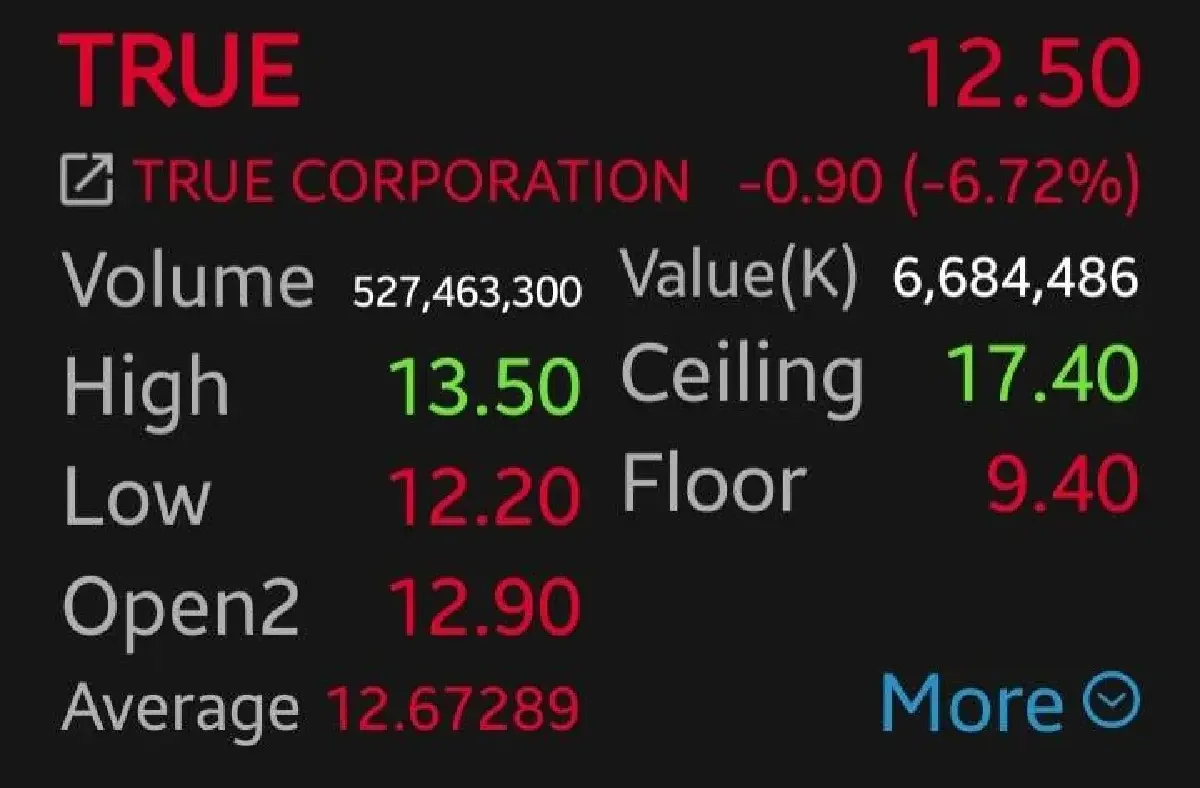
While the CEO was buying, shares of True Semiconductor, Gulf's major competitor, experienced a sharp 6% decline. This event seemed unrelated to Gulf's internal dynamics, but in the interconnected semiconductor world, such volatility often has spillover effects. True's stock drop was triggered by multiple factors: disappointing quarterly profit pre-announcement, rumors of order reductions from key customers, and broader sector rotation from growth stocks.
True's situation highlights the fragility of the current semiconductor cycle. After two years of unprecedented demand driven by pandemic-era digitalization and supply chain bottlenecks, the market is facing potential normalization. Inventory buffers are building, and some segments—especially consumer electronics—show signs of cooling. True's exposure to smartphone and PC markets makes it more vulnerable to this shift. Investors reacted swiftly, punishing the stock despite the company's healthy overall balance sheet.
The 6% decline is significant for two reasons. First, it reflects the market's hypersensitivity to any negative news in the semiconductor sector. Second, it shows how industry sentiment can overwhelm individual company fundamentals. Gulf, despite its different product mix and stronger growth trajectory, could not fully escape the downdraft. Its stock also fell modestly in sympathy, though the CEO's purchase provided some support.
This phenomenon aligns with the "herding" concept in behavioral finance. When a major player like True stumbles, investors tend to reevaluate the entire sector, often assuming similar problems exist elsewhere. The reality is more nuanced. Gulf's focus on high-performance computing and automotive chips positions it differently, but short-term market moves are rarely rational.
Industry Context: Semiconductor Cycles and Strategic Implications
To fully understand these events, one must examine the macro environment. The semiconductor industry is known for its cyclicality, driven by supply-demand imbalances that can last years. The current cycle began with a severe shortage in 2020-2021, leading to massive capacity expansion by foundries like TSMC, Samsung, and Intel, as well as specialized players like Gulf. Now, the industry is entering a phase of cautious expansion, with some analysts warning of potential oversupply in mature-node products by 2025.
However, the high-end segment where Gulf operates remains tight. Advanced nodes (7nm and below) remain supply-constrained due to the enormous cost of building new fabs. Geopolitical factors add another layer of complexity. The US-China tech war has disrupted supply chains, and export controls restrict advanced chips and equipment from reaching Chinese customers. This creates both opportunities and risks for companies like Gulf that serve a global customer base from manufacturing sites in Asia, Europe, and North America.
The CEO's stake increase can be interpreted as a bet on three key themes:
- Technological Moat: Gulf's proprietary manufacturing processes and intellectual property make it an essential partner for companies designing AI chips and next-generation processors. Barriers to entry are extremely high.
- Geopolitical Diversification: With multiple manufacturing plants across different jurisdictions, Gulf offers clients supply chain resilience—a premium attribute in today's risk-averse environment.
- Long-term Demand: Despite short-term inventory adjustments, the underlying demand for computing power driven by AI workloads is exponential. Chip consumption in data centers is expected to double every two years.
Conversely, True's stock decline is a cautionary tale about over-reliance on a few end markets. True's revenue is heavily tied to consumer electronics, known for its cyclicality. As the global economy faces headwinds from inflation and rising interest rates, consumer spending on electronics may slow. The 6% drop is a market signal that investors are recalibrating growth expectations.
Investor Perspective: Seeing the Big Picture in Small Details
For investors trying to navigate the semiconductor space, the divergence between insider buying and market price action offers valuable lessons. First, insider trading is not an infallible indicator. CEOs can be wrong, or their perspective may be too long-term for short-term traders. Nonetheless, historical data suggests that sustained insider buying at lower prices tends to pay off over 12-24 month horizons.
Second, True's stock decline may create asymmetric opportunities. If the selloff is overdone, value-oriented investors may find attractive entry points. However, caution is warranted as market adjustments in the sector can be prolonged. Fundamental analysis must be combined with a clear understanding of industry cycles.
Third, Gulf's example highlights the importance of management credibility. When a CEO puts his own money at risk, it aligns interests with shareholders and fosters trust. Companies with high insider ownership often exhibit better operational discipline and capital allocation.
To concretize these observations, consider the following table comparing key metrics for Gulf and True:
| Metric | Gulf Corporation | True Semiconductor |
|---|---|---|
| Insider Purchase (CEO) | +33% | No significant change |
| Q3 Revenue YoY Growth | 18% | 5% |
| Key Business Exposure | AI, Automotive, Advanced Packaging | Smartphones, PC, Consumer Electronics |
| P/E Ratio (TTM) | 28x | 45x |
| Gross Margin | 62% | 48% |
The valuation gap—Gulf trading at a lower P/E with higher growth—suggests the market is pricing in some skepticism or risk. The CEO's purchase may be an attempt to signal that the risk is overestimated.
Conclusion: A Tale of Two Signals
The semiconductor industry remains one of the most exciting yet perilous markets in the investment landscape. The juxtaposition of Gulf's CEO increasing his stake by 33% while the sector experienced a 6% rout encapsulates the duality of this market: insider confidence versus external uncertainty. For strategic observers, these events are not contradictions but complements. They underscore the need for a long-term perspective based on technological trends rather than short-term price fluctuations.
Gulf's story is ultimately about conviction. The CEO's decision to increase personal exposure indicates his strong belief in the company's ability to thrive amid industry headwinds. His actions echo insights from legendary investors who encourage buying when others are fearful. Meanwhile, True's stock decline reminds us that even well-managed companies can suffer from sector sentiment shifts.
As the semiconductor cycle evolves, those who can distinguish between temporary noise and structural value will be best positioned. The combined data of insider transactions and market prices provides a rich analytical canvas—it rewards patience, diligence, and the willingness to look beyond headlines. Ultimately, the most prudent approach may be to follow the money: the CEO's own capital speaks volumes about where he sees the industry heading, even if the market disagrees temporarily.