
Japan and South Korea Stock Markets: Navigating Monetary Policy Divergence and Geopolitical Risks
Keywords: Nikkei 225, KOSPI, Bank of Japan, monetary policy, financial markets, geopolitical risk, Asia-Pacific economy
Introduction
The financial landscapes of Japan and South Korea have long been intertwined, sharing structural similarities as export-driven economies with strengths in advanced manufacturing and technology. However, in recent months, their stock markets have shown a notable divergence: Japan's Nikkei 225 has soared to multi-decade highs, while South Korea's KOSPI has struggled to maintain upward momentum. This divergence reflects a complex interplay between domestic monetary policy paths, global capital flows, and persistent geopolitical tensions. Based on a recent assessment by a former Bank of Japan staff member and market data, this article provides a comprehensive analysis of the forces affecting these two benchmark indices, explores the implications of diverging policy stances, and offers a forward-looking perspective on risks and opportunities for investors.

Diverging Stock Market Performance: Facts and Figures
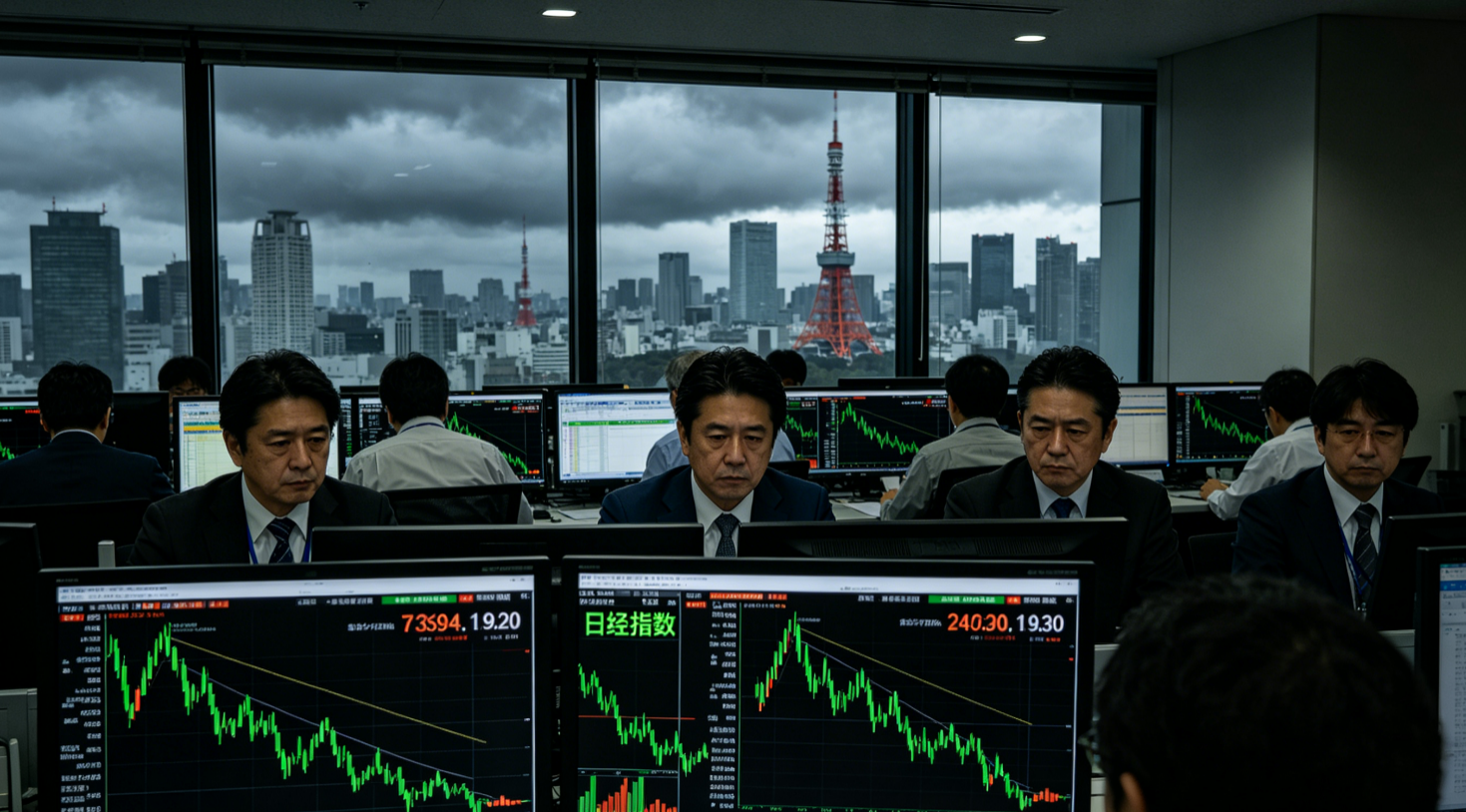
The accompanying chart illustrates the performance of Japan's Nikkei 225 and South Korea's KOSPI during a recent trading session. The Nikkei has continued its upward trajectory, buoyed by optimism over corporate governance reforms, a weak yen, and foreign inflows, while the KOSPI has been held back by weak domestic demand, a slower semiconductor recovery, and heightened concerns over North Korean provocation.
As of mid-2026, the Nikkei is up over 20% year-to-date, outperforming most major global indices. In contrast, the KOSPI has posted only modest single-digit gains, punctuated by multiple sharp corrections. The opening trading data in the chart shows that although both indices initially traded strongly, the Nikkei sustained its upward trend while the KOSPI faced profit-taking and selling pressure. This phenomenon is not temporary; it reflects deeper structural and policy-driven differences.
Monetary Policy Divergence: Japan's Cautious Normalization vs. South Korea's Pause
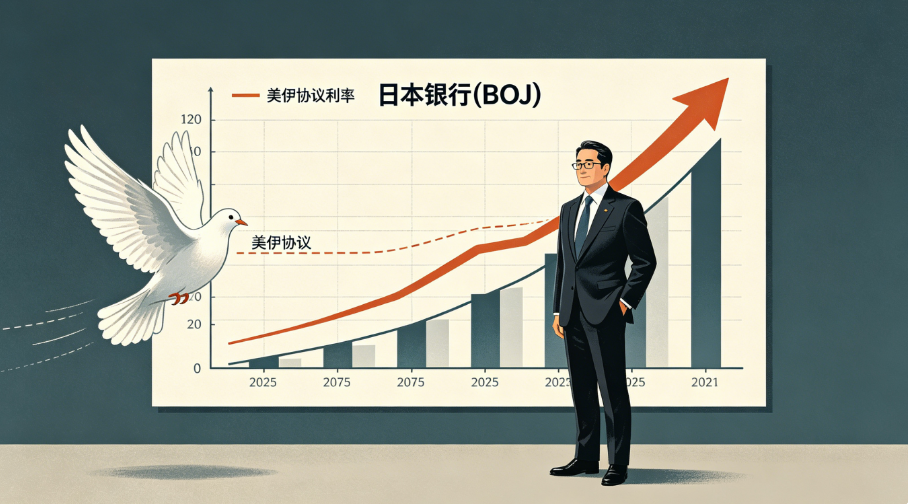
A key driver of the market divergence lies in the distinctly different monetary policy stances of the Bank of Japan (BoJ) and the Bank of Korea (BOK). In a recent interview, a former BoJ staff member with decades of experience emphasized that Japan's normalization process is still in its very early stages. "The BoJ has only just begun to exit ultra-loose policy," the former staff member said. "Inflation expectations are not yet firmly anchored at 2%, and real economy signals are mixed. Tightening too early could jeopardize the recovery, especially in a fragile global environment."
This cautious stance has kept Japanese government bond yields relatively low and the yen weak, providing a tailwind for export-oriented companies—many of which are listed on the Nikkei. Furthermore, the BoJ's dovish rhetoric has encouraged carry trades and foreign portfolio inflows, boosting share prices.
Meanwhile, the Bank of Korea embarked on its tightening cycle earlier than the BoJ, raising rates from near zero to over 3% before pausing due to slowing growth and high household debt. The BOK's relatively hawkish stance, combined with a (until recently) strong won, has eroded competitiveness for Korean exporters. Furthermore, the narrowing interest rate differential between Korea and major economies such as the US has reduced the attractiveness of Korean bonds and equities. As a result, the KOSPI has faced a headwind.
The Role of Structural Reforms and Corporate Governance
The rally in Japanese markets is not purely monetary. The Tokyo Stock Exchange's push for improved corporate governance—requiring listed companies to disclose and implement plans to enhance profitability—has spurred a wave of share buybacks, dividend increases, and operational efficiency improvements. Foreign investors have rewarded these efforts with net buying.
In contrast, despite the Korean government's "Corporate Value-Up" program launched in 2024, corporate governance reforms have been slow to materialize. Implementation has been uneven, and the discount at which Korean stocks trade relative to global peers persists. The so-called "Korea Discount" continues to weigh on the KOSPI, as foreign investors demand a higher risk premium.
The Geopolitical Shadow and the Peninsula Factor
The reference to "peninsula" economic dynamics is crucial. The Korean Peninsula remains a hotspot of geopolitical tension, with North Korean missile tests and nuclear ambitions causing periodic jitters. The former BoJ staff member also addressed this in the interview: "Geopolitical risks on the Korean Peninsula are not fully priced into the KOSPI. If a serious escalation occurs, the impact could be very severe, not only for South Korea but also for Japan through supply chain disruptions and regional security implications."
Given South Korea's geographic proximity and the concentration of its industrial complexes near the border, such risks are particularly acute for the KOSPI. Although investors have grown somewhat numb to isolated provocations, a sustained crisis would trigger capital flight and risk-off sentiment. Japan, while not immune, benefits from a more secure geographical profile and a more diversified investor base.
Sector Composition and Global Linkages
Another factor is the difference in sector composition. The Nikkei has strong representation in automobiles, electronics, and financial services, all of which benefit from a weak yen and global demand recovery. The KOSPI is more concentrated in semiconductors (Samsung and SK Hynix) and shipbuilding. The semiconductor cycle, after a boom in 2023-2024, entered a mild correction in 2025-2026. While AI-related chip demand remains strong, memory chips face oversupply and pricing pressure. This sector headwind directly hits the KOSPI.
Both indices are sensitive to China's economic conditions, but Japan's export exposure to China is more diversified across intermediate goods, whereas Korea's reliance on Chinese demand for semiconductors and displays is more concentrated. Slower-than-expected growth in China therefore weighs more heavily on the KOSPI.
Looking Ahead: Convergence or Continued Divergence?
Looking forward, the paths of the Nikkei and KOSPI could converge if certain conditions materialize. The former BoJ official offered a cautious view: "If the BoJ accelerates normalization due to persistent inflation, the yen could appreciate significantly, which would undermine corporate profitability and the Nikkei. At the same time, the BOK may begin cutting rates later this year, boosting the KOSPI. The balance of risks is shifting."
Key variables to watch include:
- BoJ policy trajectory: Any hawkish surprise would trigger yen strengthening and a Nikkei correction.
- Geopolitical stability on the Korean Peninsula: Substantial progress in denuclearization talks or a major crisis would significantly alter the risk premium on the KOSPI.
- Global demand cycle: A synchronized global recovery would boost both indices, while a recession would drag them down.
- Korean corporate governance reforms: Meaningful implementation could unlock value and attract foreign inflows.
Conclusion
The stock markets of Japan and South Korea, despite their historical and economic ties, are currently on divergent trajectories driven by monetary policy divergence, corporate governance dynamics, and geopolitical risk perceptions. The Nikkei's ascent, powered by a cautious BoJ and governance improvements, contrasts with the KOSPI's struggles under tighter conditions and the "Korea Discount." However, the situation is dynamic. As the former BoJ staff member reminded us, policy environments can change rapidly, and investors must stay attuned to both domestic developments and global macroeconomic trends. The two markets may not remain split forever; convergence could occur if Japanese policy normalizes and Korean risk premiums diminish. Until then, investors should treat them as distinct risk-return exposures. Understanding these nuances is crucial for navigating the complex Asia-Pacific financial landscape.