
Title: Global Market Dynamics: Japan Interest Rate Adjustment and SpaceX's IPO Potential
Keywords: Japan interest rate, monetary policy, SpaceX IPO, capital markets, global economy
Introduction
In an era of rapidly changing global economic landscapes, two distinct yet equally significant events have captured the attention of investors, policymakers, and market analysts. The Bank of Japan's recent adjustment to its interest rate policy could mark a shift from decades of ultra-loose monetary policy, while SpaceX—the private rocket company founded by Elon Musk—is reportedly considering an initial public offering that could reshape the space industry and broader capital markets. Based on expert analysis and market data, this article explores the implications of both developments, providing a comprehensive look at their interconnected effects on global finance and industry.

Figure 1: Expert analysis of the Bank of Japan's interest rate adjustment and its macroeconomic implications.
Japan Interest Rate Adjustment: Long-Awaited Normalization
For over a decade, Japan has been a global outlier, maintaining negative interest rates and aggressive quantitative easing to combat deflation and stimulate growth. However, recent economic data—rising inflation, tight labor markets, upward wage pressures—have prompted the Bank of Japan to consider a modest rate hike. According to leading economists, this move is not a simple reaction to global trends but a prudent step toward policy normalization. The adjustment carries far-reaching implications. Domestically, it could strengthen the yen, lower import costs, and ease the burden on consumers, but it also raises borrowing costs for businesses and the government—Japan's public debt exceeds 250% of GDP. Internationally, a stronger yen could trigger shifts in carry trades, affecting emerging market currencies and global bond yields. Investors are closely watching the pace and magnitude of further adjustments, as any misstep could destabilize fragile global financial conditions.
SpaceX's IPO: Opening a New Era of Space Capital
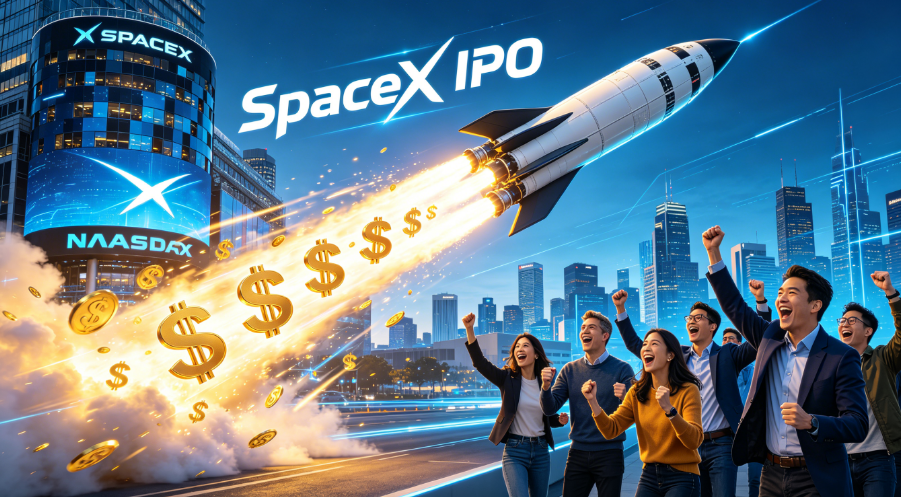
Figure 2: Market analysis of SpaceX's potential initial public offering and its impact on the space sector.
While Japan navigates monetary policy, the private space sector is approaching a milestone moment. SpaceX, valued at over $180 billion in private markets, has long dominated satellite launches, crewed missions, and the Starlink broadband network. IPO rumors—possibly in late 2026 or 2027—have sparked intense debate among market analysts. Going public would not only provide liquidity for early investors and employees but also unlock massive capital for future projects like Starship and interplanetary travel. The implications extend far beyond SpaceX itself. A successful IPO would validate the commercial viability of space exploration, spurring more private investment and potentially triggering a wave of SPAC mergers and secondary offerings in the space sector. However, risks remain: high capital expenditure, regulatory uncertainty, and competition from rivals like Blue Origin and global players. The exact timing and valuation will depend on factors such as Starlink's revenue growth, Starship's operational milestones, and broader market sentiment.
Interconnections: Monetary Policy and Capital Market Flows
At first glance, Japan's monetary policy and SpaceX's IPO seem unrelated. But they are closely linked through global capital flows. Changes in Japanese interest rates can alter the cost of capital for risk debt and private equity, affecting valuations of companies like SpaceX. For instance, if the yen strengthens and Japanese investors repatriate funds, global liquidity could tighten, making financing more expensive for high-growth firms. Conversely, a strong yen might encourage Japanese institutions to seek higher yields abroad, potentially stimulating demand for US tech IPOs. Moreover, the BoJ's policy has historically influenced risk appetite. A more hawkish BoJ could dampen the "risk-on" environment that supports speculative assets, including pre-IPO private companies. SpaceX's IPO team must therefore watch Tokyo as closely as Cape Canaveral.
Conclusion
The intersection of monetary policy and corporate finance paints a complex picture of cause and effect. Japan's interest rate adjustment, though modest in absolute terms, marks a tectonic shift in one of the world's largest economies—a shift that will ripple through currency markets, bond yields, and investment strategies. Meanwhile, SpaceX's potential IPO represents the maturation of a once-niche industry into a mainstream investment opportunity. For policymakers, investors, and industry leaders, staying informed and adaptable is not just prudent; it is necessary. As these two stories unfold, the global financial community holds its breath. Decisions made in Tokyo and the trajectory set by SpaceX will shape not just the coming quarters, but the broader architecture of 21st-century capitalism.