
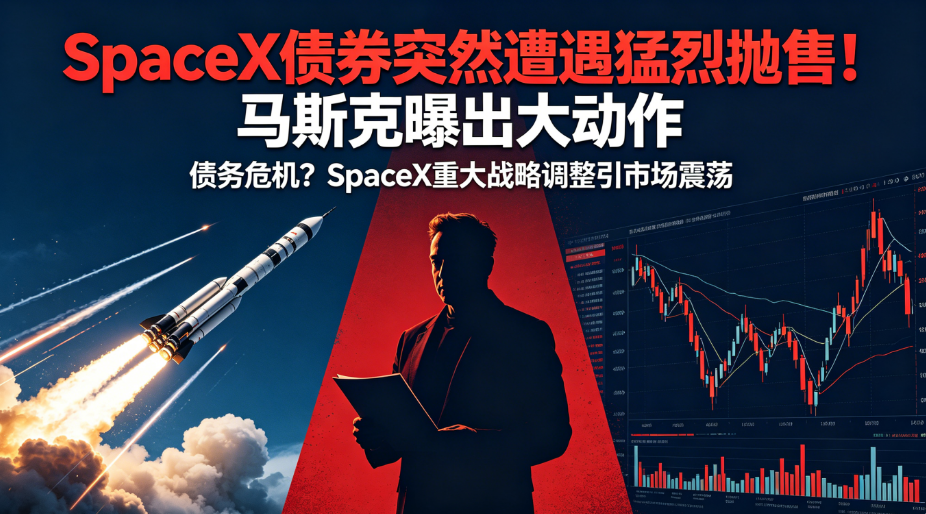
SpaceX Bond Crisis and Elon Musk's Network Strategy
Keywords: SpaceX, Bond, Elon Musk, Acquisition, Financial Market
Introduction
On June 26, giant commercial space company SpaceX faced an unexpected event when newly issued bonds worth $250 billion were heavily sold off in the secondary market, causing the 10-year bond yield to surge near 6% and the spread with US government bonds to expand by more than 1.6 percentage points. This situation reflects the challenges leading tech companies face in a tight financial environment.
Meanwhile, Elon Musk's latest move is drawing attention after documents released by the US Federal Trade Commission (FTC) indicated that Musk is considering acquiring Mesh, an optical technology company, and antitrust review has already been placed on an expedited track.
SpaceX Bond Selloff
Reasons for Bond Price Collapse
The selloff in SpaceX bonds occurred within just 48 hours after pricing, starkly contrasting with the "strong demand" image seen initially. Data from MarketAxess shows that the 10-year SpaceX bond yield surged nearly to 6%, while the spread for 2046 and 2056 bonds widened to 1.93 and 2.01 percentage points over government bonds respectively.
Interestingly, although SpaceX has a credit rating of Baa1/BBB (investment grade), actual trading prices were worse than some "junk" or BB-rated issuers. Data from Ice Data Services indicates the average spread for BB-rated junk bonds was 1.67 percentage points, lower than what SpaceX faced.
Role of Speculative Investors
Analysts point out that the main reason for this collapse was "fast money" or short-term speculators. According to Bloomberg, SpaceX's initial bond offering had total orders of nearly $900 billion, an extremely high figure that led SpaceX to increase issuance size from $200 billion to $250 billion.
However, these investors did not intend to hold long term. Tony Trzcinka, a portfolio manager at Impax Asset Management, said that the market expected SpaceX's spread to widen, but the extent seen was a "perfect storm" resulting from multiple factors: contraction in company valuation since the IPO, technical pressure from the enlarged issuance, and investor uncertainty in assessing the company's risk.
Comparison with Other Companies
Michael Campion of PGIM said, "In the investment-grade bond market, what we care about is the company's ability to repay debt. We are used to lending based on actual cash flow, not expectations." This contrasts with NVIDIA, which also recently issued $250 billion in bonds but saw its long-term bond spread widen by only 11-12 basis points, while Alphabet's bonds actually narrowed.
Impact on Nasdaq 100 Index
Interestingly, SpaceX shares are about to be bought by passive investors after Nasdaq announced a review of SpaceX's eligibility to join the Nasdaq 100 index. Index tracking funds are expected to start buying shares on July 6, and SpaceX will officially enter the index on July 7. Although the weight will be less than 1%, due to SpaceX's limited free float, this level of buying could still have an impact.
Elon Musk's Acquisition of Mesh
Acquisition Details
Musk's latest move revealed by the FTC is his consideration of acquiring Mesh, a startup founded by three former SpaceX engineers last year. Mesh develops optical devices for high-speed data center communication, using light to transmit and receive data between data centers.
Mesh launched in February after completing a $50 million Series A round led by Thrive Capital. Previously, the three co-founders—Travis Brashears, Cameron Ramos, and Serena Grown-Haeberli—developed optical communication links that connect thousands of SpaceX Starlink satellites.
Strategic Importance
This acquisition is part of SpaceX's expansion strategy. Earlier, SpaceX acquired Cursor, an AI startup, to strengthen xAI's coding capabilities, which was a weakness of the company.
Additionally, SpaceX has signed computing cooperation agreements with Anthropic, Google, and Reflection, an AI startup expected to generate significant new revenue.
Future Infrastructure
SpaceX is building data centers in Tennessee and Mississippi, along with plans for space-based processing centers. Acquiring Mesh could help SpaceX improve data center efficiency, whether on Earth or in space.
Besides AI investment, Musk has committed to building an "Everything App" that includes banking and payment services under X Money on the X platform.
Summary
SpaceX's current situation reflects the complexity of rapidly changing financial markets, especially for high-growth tech companies still lacking business stability. The bond selloff is a warning signal of investor sensitivity as they begin to seek risk.
While Musk expands his empire through the Mesh acquisition and AI investments, which could create important synergies for SpaceX's space business, the FTC's expedited review indicates the acquisition does not raise antitrust concerns.
Ultimately, SpaceX's long-term success will depend on its ability to adapt to changing market conditions and create real value for investors. Although bonds are being sold off now, inclusion in the Nasdaq 100 and continued business expansion may help strengthen confidence in the long run.