
Title: Historical Bubbles: The Cycle of Greed and Crash
Keywords: Bubble, Stock Market, 1929 Crash, Leveraged Speculation, Regulators, Risk
Introduction
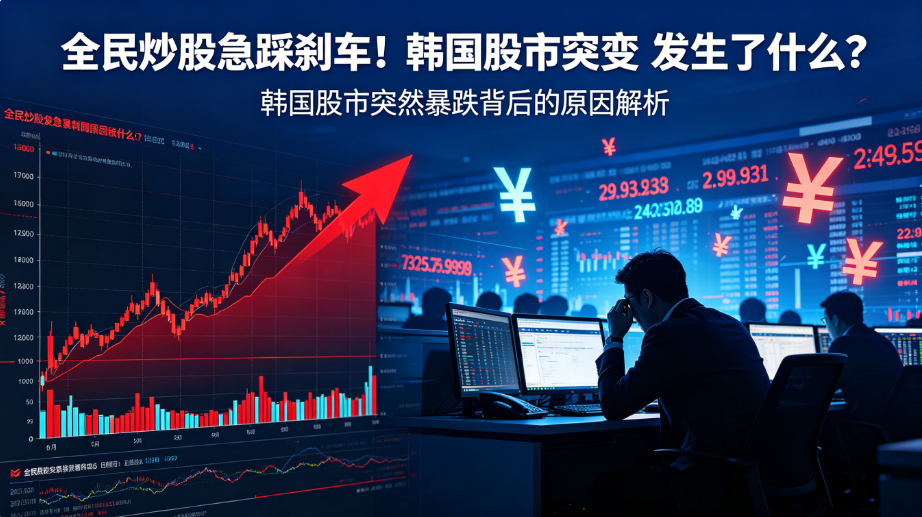
In the boisterous and hopeful financial world, a phenomenon that repeats throughout history is the "Bubble"—an irrational surge in asset prices driven by greed, speculation, and a torrent of inflowing funds. This phenomenon not only reflects bold and aggressive new retail investors but also includes credit expansion and capital inflows from large financial institutions, as seen in what is called the "world's hottest stock market" in South Korea, where regulators have begun introducing measures to slow its rapid rise.
Investors from all walks of life flood into the market, trading volumes hit record highs, leverage usage increases sharply, large companies raise funds—all reminiscent of historical bubbles, whether the Dutch tulip mania or the US internet bubble.
Bubbles: The Cycle of Excitement and Pain
Most people caught up in market euphoria hope the bubble continues to inflate, but regulators are inherently anxious because they know the consequences of a bubble burst. The collapse of a bubble not only shrinks the wealth of individuals and families but also leads to loss of consumer confidence, shrinking investment, economic slowdown, widening wealth inequality, failure of financial institutions, and capital outflows. These cause both psychological and material damage, potentially leaving scars on a nation for decades.
Sometimes bubbles can also benefit future development in infrastructure, such as the 2000 internet bubble laying the foundation for the digital age. However, society must always choose between fairness and efficiency, and bubbles often inflict great harm on the most vulnerable groups. As revealed by the book "1929," the hardest hit in 1929 were not the speculators who knew the risks, but ordinary families who trusted the rhetoric of Wall Street and big corporations until it was too late.
Historical Bubble Cycle: Lessons from 1929
Every bubble has a needle waiting to be accurately inserted, and its bursting consequences are bitter and hard to bear, requiring more than a decade for both individuals and nations to heal.
The US stock market of 1929 is a classic example. During the Roaring Twenties, America was full of hope and vitality, but a few years later during the Great Depression, the country became a different world.
The turning point occurred with the crash of the long-speculative New York stock market in October 1929. The Dow Jones index fell nearly 90% from its September 1929 peak, bottoming out in July 1932. The stock market crash triggered bank runs, mass bankruptcies, and soaring unemployment, and spread globally, leading to the decade-long Great Depression.
Everyday life for Americans changed completely. Witnessing the stock market crash was an unnatural experience that shocked the nation, causing psychological breakdowns and loss of confidence. President Herbert Hoover even acknowledged in a letter that the US was facing a difficult situation, leading to unemployment, hardship, and widespread panic. Despite tools for credit expansion, in that business environment, neither lenders nor borrowers dared to act.
The Pied Piper of Finance
Recall that when margin trading volume increased from $1 billion in the early 1920s to $6 billion, the Fed warned in February 1929, asking banks to avoid speculative loans. George Harrison, then President of the New York Fed, believed it was better to let the stock market fall from the 10th floor than the 20th floor, as the impact would be easier to control.
But the Fed's action met strong opposition from Wall Street. Famous speculator Durant said in a radio speech: "On this peaceful land, a big war is breaking out between the business community and the Fed. When America is enjoying unprecedented prosperity, the Fed uses ugly and absurd tactics to create panic, costing the public billions of dollars."
We should not overemphasize Wall Street's voice because they are part of the game, stakeholders. In 1929, $8.5 billion in bank funds flowed into brokers associated with the NYSE, double the 1928 amount. Not only brokers lent money; US and foreign companies also poured profits into the short-term loan market, chasing annual rates as high as 20%.
Under pressure from shareholder interests, even normal companies often release good news in an optimistic market. Worse, amid market frenzy, fraud, information distortion, and lies also increase. Unscrupulous people act like "Pied Pipers of Finance," trying to lure the most vulnerable investors into the riskiest areas. Beneath the surface of market prosperity, there are often elaborate scams. Scammers exploit people's desire for wealth, which is part of the bubble formation process.
Charles Kindleberger's 1989 book "Manias, Panics, and Crashes" wrote: "We think fraud arises out of necessity... In boom times, wealth is created, people become greedy, and scammers take advantage of the desire for riches."
People love to hear exciting stories and simple explanations about the laws of the world. For centuries, people have craved easy money, from canals, railways, radio, cryptocurrencies to AI. These temptations have always triggered similar human behavior. Each time a wave hits, it makes us mistakenly believe that this time we have learned from history and won't be fooled.
Conclusion: Lessons Not Forgotten
History tends to repeat itself. The disaster caused by stock market crashes is not limited to recession periods but can last decades. The US crash of 1929, the 2000 internet bubble burst, and Japan's "Lost Decade" adjustment have all caused unspeakable suffering to countless ordinary people, leaving deep scars on individuals and nations.
So could the 1929 disaster have been avoided? "The answer is yes. There were countless opportunities to apply brakes before speculative waves spiraled out of control. But if we dig deeper, it requires foresight—to resist the lure of short-term profits while foreseeing long-term disaster," said Andrew Ross Sorkin, author of "1929."
Therefore, when we see signs of a bubble—whether fervent prosperity, increased leverage, or massive capital inflows—we should always recognize that this is both a fascinating and deadly cycle. Maintaining vigilance and rational decision-making will help us avoid the possible pain of a crash.