
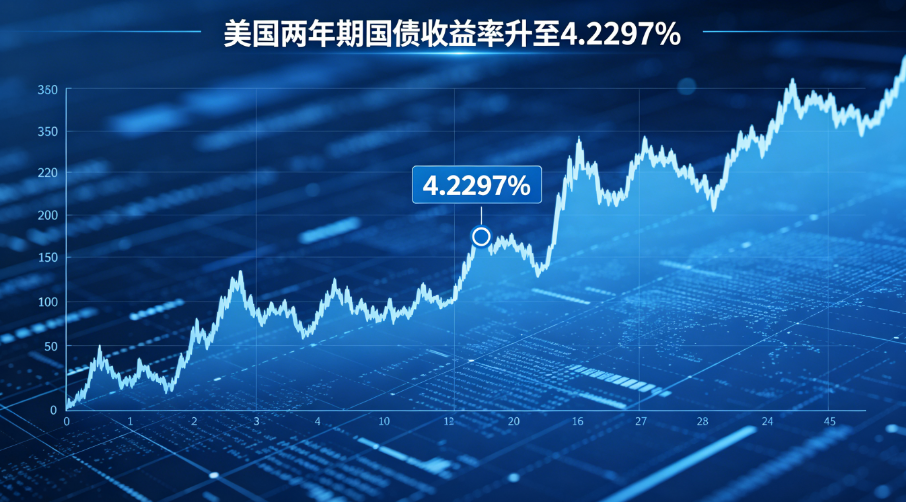
US Two-Year Treasury Yield Hits Two-Year High, Reflecting Monetary Policy Concerns
The US two-year Treasury yield rose to 4.2297%, a new high since February 2025, drawing attention from global investors and economic observers. This occurs against a backdrop of monetary policy uncertainty in US and international financial markets.
Why Short-Term Treasury Yields Matter
For those unfamiliar with the bond market, a brief explanation: The two-year Treasury is a key indicator of short-term interest rate expectations, especially when the Fed is in a decision-making period for adjusting policy rates.
A rise in the two-year Treasury yield means investors expect the Fed to maintain or hike rates in the near term, which directly impacts borrowing costs for households and businesses.
"The 4.2297% figure is not cold data; it tells a story of complex expectations and concerns among global investors," said an analyst at a leading securities firm.
Drivers of the Yield Increase
Analyzing the reasons for the surge in the two-year Treasury yield, several factors are worth noting:
First, US economic data has been stronger than expected, especially continued expansion in employment and consumer spending, leading investors to lower expectations of a near-term Fed rate cut.
Second, concerns that inflation may not decline as quickly as previously forecast, particularly as energy prices and wages continue to rise.
Third, more cautious signals from the Fed regarding easing monetary policy, with many beginning to discuss the possibility of rates staying higher for longer.
Impact on Financial Markets and the Economy
The rise in US two-year Treasury yields affects not only the bond market but also spreads to other asset classes.
Interest-rate-sensitive tech stocks often bear the brunt, as these companies rely on borrowing for future growth; while banks and financial institutions may benefit from widened spreads.
For the real estate market, rising Treasury yields mean mortgage rates may increase, affecting homebuyer purchasing power.
"The two-year yield breaking above 4.2% is a signal the market needs to watch closely, as it indicates the interest rate cycle may last longer than many expected," commented a bond fund manager.
Historical Comparison
Looking back, a two-year yield of 4.2297% is not particularly high relative to the past, but its timing and economic context are interesting.
Before COVID-19, the two-year yield was below 2%, at historic lows. After the Fed's aggressive rate hikes in 2022-2023, yields rose rapidly.
What is different this time is that uncertainty about the direction of monetary policy remains high, and although there are signs inflation is beginning to slow, it has still not reached the Fed's 2% target.
Investor Views and Portfolio Adjustment Strategies
In this environment, many investors are beginning to adjust their investment strategies, especially in the bond portfolio portion.
A popular strategy currently is the "bond ladder," which involves diversifying across bonds of different maturities to reduce interest rate volatility risk and increase chances of higher returns.
In addition, some investors choose to hold cash and wait, believing that if yields continue to rise, they can enter at more attractive price levels.
"This is not just about rising yields; it's about investors adapting to a prolonged high-rate environment," said an economist at a commercial bank.
Future Trends
The future direction requires attention to upcoming economic data and speeches by Fed officials in the coming weeks and months.
If inflation data continues to exceed expectations or the labor market remains tight, the two-year yield could rise further. Conversely, if economic data clearly slows, it could signal a decline in yields.
Additionally, geopolitical factors, especially US-China trade tensions and Middle East uncertainty, cannot be ignored.
Conclusion: Views for Retail Investors
For retail investors, the rise in the two-year Treasury yield brings both opportunities and risks.
On the opportunity side, investors seeking assured returns may consider short-term bonds or bond funds for higher yields; while those holding long-term bonds may face price declines.
Most importantly, maintain investment discipline and proper diversification, and do not panic over short-term fluctuations, as financial markets will eventually adjust to a new equilibrium based on economic fundamentals.
"Whether it's 4.2297% or another number, investors must remember: the bond market is a gauge of many people's expectations. Understanding these expectations is key to making informed investment decisions." This is advice worth remembering for professional financial planners.
The rise in yields may signal challenges ahead, but for those prepared and with a deep understanding of financial market mechanisms, it also presents opportunities.